
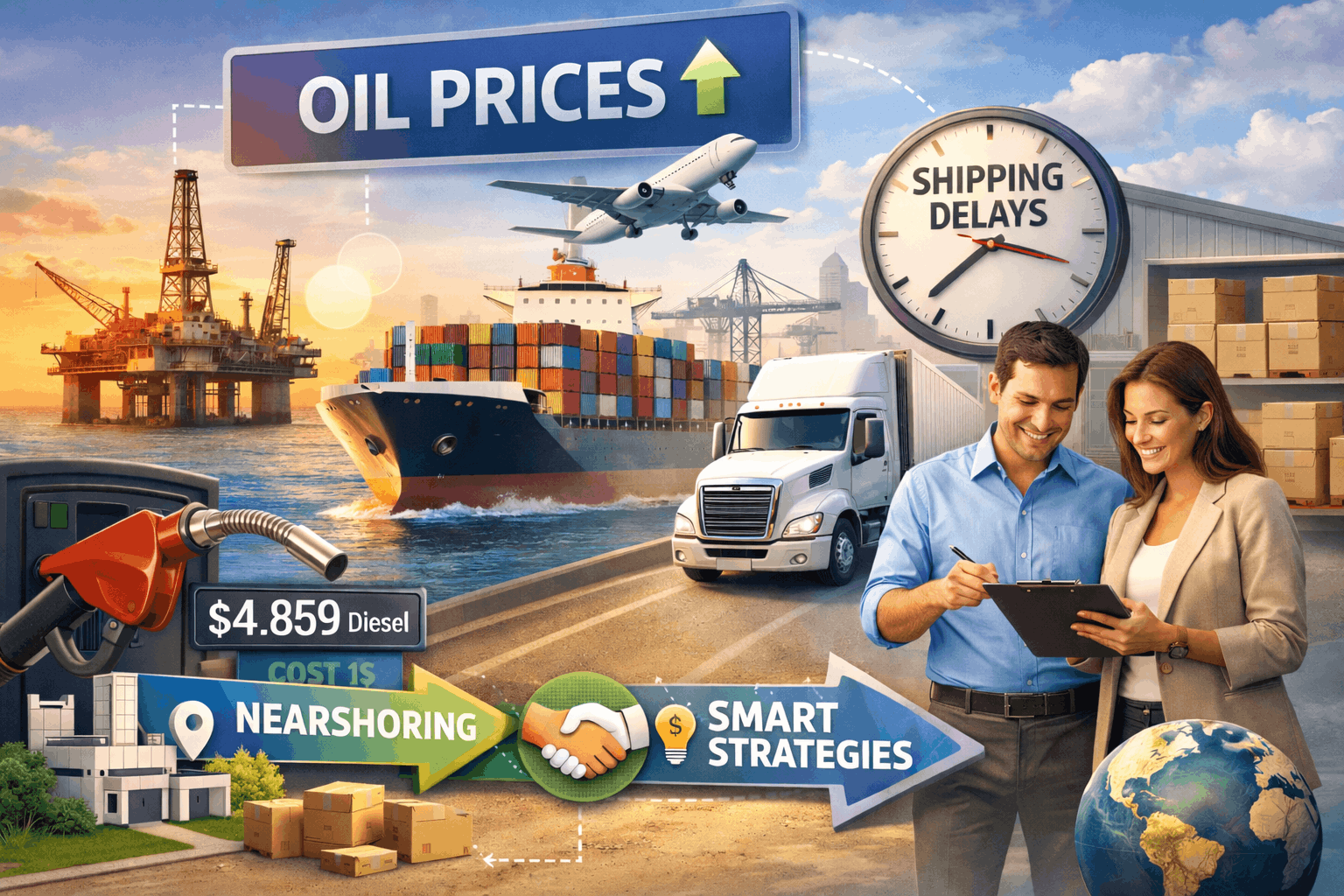
Oil is volatile, ships are slow, and external costs don’t care about your budget. Whether you make things, move things, or sell things to other businesses, 2026 is pressing on everyone’s margin at once.
Let’s not sugarcoat it. If you’re running a B2B operation right now, whether you make things, distribute them, or service the companies that do, your margin is getting chewed up. And the calendar isn’t going to fix it.
Energy costs are up. Shipping is slow and unpredictable. Your customers are pushing back on price increases while your own costs keep climbing. Everyone in your building knows it except whoever is still signing contracts based on pre-disruption assumptions.
Welcome back to Polibiz. We took a break. The economy didn’t.
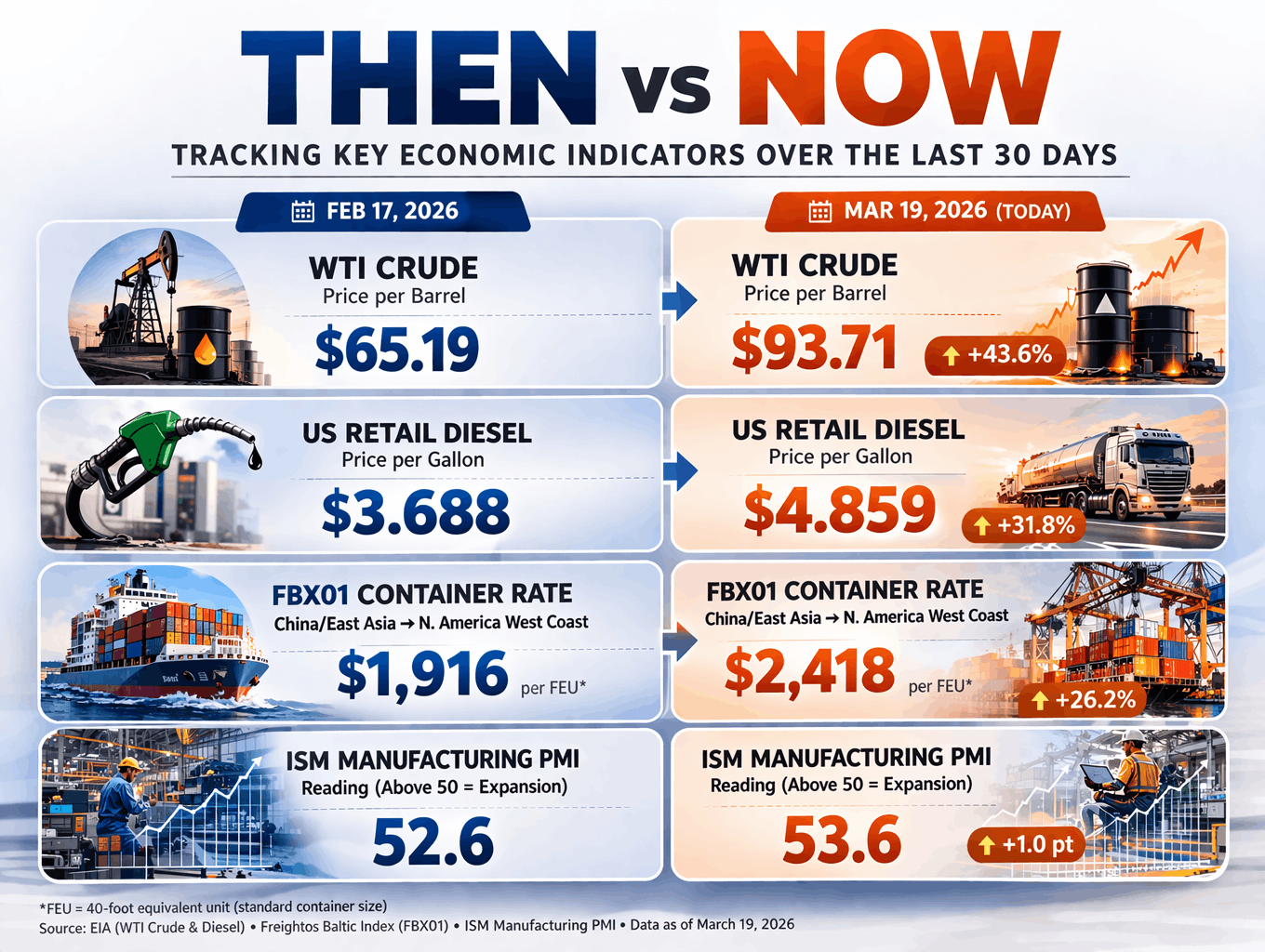
The drivers are not mysterious: OPEC+ production cuts, the threat of Strait of Hormuz disruption amid escalating tensions with Iran, Iranian strikes on Qatar’s LNG facilities as of March 19, 2026 sending energy markets sharply higher, and stronger than expected global demand. None of those factors are resolving quickly. Plan accordingly.
The energy problem hits everyone in B2B. Distributors carry it in freight costs. Service businesses carry it in fleet and facilities. Manufacturers absorb it at both ends. When energy prices move, the ripple goes through the entire ecosystem. The EIA publishes a Short-Term Energy Outlook every month. If you’re not reading it, start. Build a range into your cost model and make sure your operation can survive the top of it.
The real cost of shipping delays isn’t on the freight invoice. It’s what unpredictability does to inventory decisions across the whole chain. Everyone buffers. Warehouses fill up. Working capital sits on a shelf. The further you are from the end customer, the worse it compounds.
Companies across every B2B segment are moving supply relationships closer to home, not for political reasons, but for predictability. A supplier 400 miles away is simply more reliable than one 8,000 miles away. Remember the Ever Given? March 2021, a single container ship wedged across the Suez Canal for six days, holding up $9.6 billion worth of goods per day. The canal carries 12 to 15 percent of all global trade. The vulnerability wasn’t created that day. It was just made visible. The companies that restructured after 2021 have held up better through every disruption since.
So what do you actually do?
Know your real cost to serve: Every B2B relationship has a true cost that doesn’t appear on the invoice: freight, handling, inventory carrying cost, and implicit risk, including any costs for failure points. Map it for your top accounts and top suppliers. Calculate what it actually costs to operate each relationship. You’ll find surprises in both directions.
Use Chain Store Guide’s data intelligence: Chain Store Guide’s data intelligence maps the regional supplier and distributor landscape by product category. If you haven’t looked at what’s available within a few hundred miles, you’re leaving options on the table.
Consolidate your logistics relationships: Two or three committed carrier partners with real volume commitments will deliver better rates and service than five fragmented ones every time.
Rethink your inventory posture: Recalibrate using actual recent lead time variability, not historical averages from a more stable era.
Get ahead of your energy exposure: Audit your full energy cost across fleet, facilities, and logistics. Decide whether fixed-price contracts or alternative energy options make sense for your scale.
Check the health of your critical partners: A sole-source supplier quietly struggling is an operational time bomb. Check in on the health of the relationships your business depends on, not just their delivery performance.
Marketing matters just as much as operations right now. B2B buyers under budget pressure scrutinize more, take longer to decide, and need a stronger business case. Lead with outcomes, not features. Put the financial case in the first sentence, not the third paragraph. Concentrate spend on accounts most likely to convert. And don’t let acquisition dominate at the expense of retention — your existing customers are being called on by competitors with sharper pricing every week.
Looking ahead, the structural forces driving today’s costs are not temporary. Trade policy is moving toward domestic production regardless of who holds office. AI-driven demand forecasting, inventory management, and targeted marketing are becoming accessible to mid-size B2B companies fast. The regional sourcing case only strengthens as domestic suppliers scale and the price gap with overseas narrows. The companies getting into that cycle now will have advantages that latecomers can’t easily close.
The map already exists. Regional suppliers, distributors, and partners are closer than you think, and the data to find them is available now. Chain Store Guide’s data intelligence is the place to start. Visit chainstoreguide.com to see what’s available in your region, by category, right now.
Sources: Lloyd’s List; UNCTAD Review of Maritime Transport; Reuters; BBC; Associated Press; EIA Weekly Retail Fuel Report; Freightos Baltic Index; ISM Manufacturing Report on Business; CBS News; CNBC, March 19, 2026.




April 2, 2026
Gas is up. Food costs more. Buyers are cautious. However, the B2B companies growing right now have figured something out:https://www.chainstoreguide.com.
June 26, 2025
If you’re running a B2B company right now, you’re probably watching the headlines about major retail and restaurant chains goinghttps://www.chainstoreguide.com.
April 3, 2025
So, here’s the deal: On April 2, 2025, President Trump announced a huge set of new tariffs—starting at 10% onhttps://www.chainstoreguide.com.