

There is no shortage of AI hype. However, despite the noise, B2B sales and marketing teams are quietly making real changes to how they work. in a climate where budgets are tight and every dollar needs to justify itself, the gap between teams using AI well and those still waiting to figure it out is growing fast.
Teams that already leverage AI are seven times more likely to meet or exceed their organizational goals, while those that have yet to adopt it are three times more likely to miss their targets.
The old prospecting model was simple: pull a list, blast an email, hope someone bites. AI is changing the front end of that equation. Teams are using AI to identify accounts that fit their ideal customer profile with far more precision, analyzing firmographic signals, buying behavior patterns, and technographic data to prioritize who deserves attention before a single outreach touchpoint. AI sales tools can increase leads by 50% and cut acquisition costs by up to 60% through enhanced targeting and scoring. In a market where buyers have less patience than ever for generic outreach, that kind of relevance is the difference between a reply and a delete.
Traditional lead scoring was largely guesswork dressed up as logic: assign points for job title, subtract points for a small company, add points for opening an email. It worked until it did not. AI-powered scoring models now incorporate behavioral signals, engagement patterns, and third-party intent data to surface the prospects most likely to convert, and the best implementations update dynamically. 81% of sales professionals who frequently use AI report shorter deal cycles, which translates directly to fewer wasted conversations and more deals that close.
Content production is another area where AI is doing real work. Almost two-thirds of B2B marketers (63%) use AI to create promotional content such as landing pages and email copy, making it the most cited use case among survey respondents. The value is not in replacing writers. It is in eliminating the blank-page problem and freeing up strategic thinking time. Marketers using AI save more than five hours per week on content creation tasks, and a 1,500-word blog post that once took 8 to 10 hours to produce now takes under two hours. The B2B teams doing this well have built clear guardrails: brand voice documentation, approval workflows, and a human always in the loop before anything goes out.
One application that gets less attention than it deserves is data enrichment. AI-powered tools are helping B2B teams keep their CRMs clean, current, and actionable by automatically filling gaps in contact records, flagging outdated information, and surfacing new decision-makers when org charts shift. Better data feeds better segmentation, and drives higher conversion rates across every channel.
Which brings us to the most important point in all of this. Every AI application mentioned above depends on the quality of data feeding it. AI does not fix bad data. It amplifies it. While 98% of companies are increasing AI spend, only 19% of B2B teams have fully integrated AI into their daily workflows. A weak data foundation is one of the fastest ways to burn spend with nothing to show for it.
At Chain Store Guide, we have been thinking hard about this intersection of AI and data quality. Our data is researched using a combination of AI integrations and human verification, so the foundation is built to hold up under real-world use. Our AI assistant Arty, now available in beta to Chain Restaurant Premier subscribers, is designed to help users surface insights from that verified database faster by asking natural language questions and getting actionable answers without navigating complex filters. Arty is coming soon to all of our online PLUS, Premier, and Elite databases. It is a small example of what becomes possible when good data and useful AI meet.
The teams winning right now are not the ones with the most AI tools. They are the ones who got their data house in order first.
Chain Store Guide has been the trusted source for retail and foodservice intelligence for over 90 years. Learn more at chainstoreguide.com.
Sources
ON24. The State of AI in B2B Marketing in 2024. 2025 Digital Engagement Benchmarks Report.
G2. AI in B2B Marketing: How Teams Are Using AI in 2025.
Cirrus Insight. AI in Sales 2025: Statistics, Trends and Generative AI Insights.
InsightMark Research. AI in B2B Sales and Marketing Statistics and Facts.
McKinsey and Company. State of AI 2025 Report.
HubSpot. State of Marketing Report 2025.




February 4, 2026
After 30 years of serving up Caribbean vibes and tropical cocktails, Bahama Breeze is calling it quits. Darden Restaurants announcedhttps://www.chainstoreguide.com.
January 30, 2026
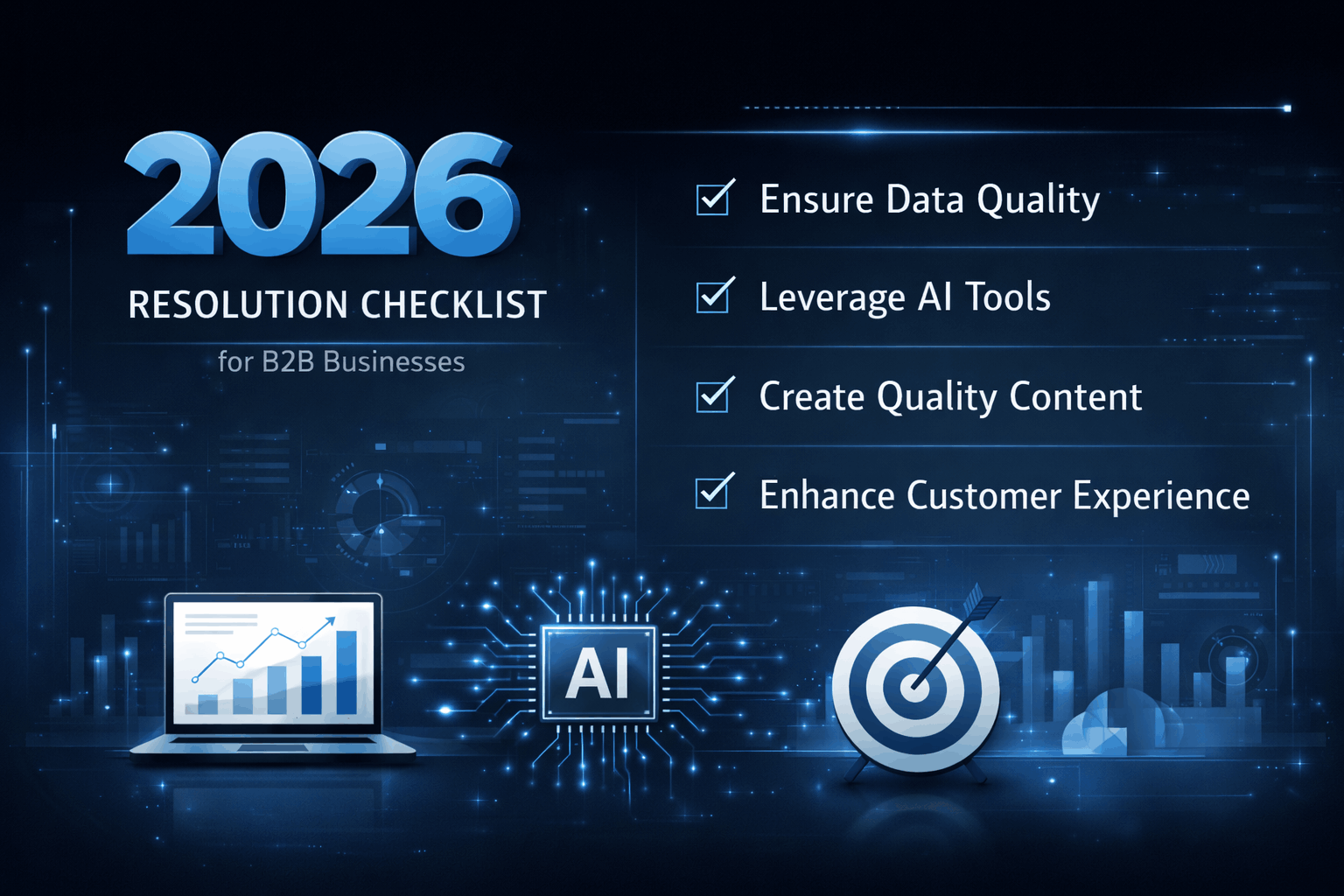
As we enter 2026, B2B marketing is undergoing a profound transformation. Buyers are more sophisticated, and the tools at ourhttps://www.chainstoreguide.com.
January 23, 2026
B2B lead generation is changing fast. The old strategy of chasing volume over quality? It’s not working anymore. Companies arehttps://www.chainstoreguide.com.