
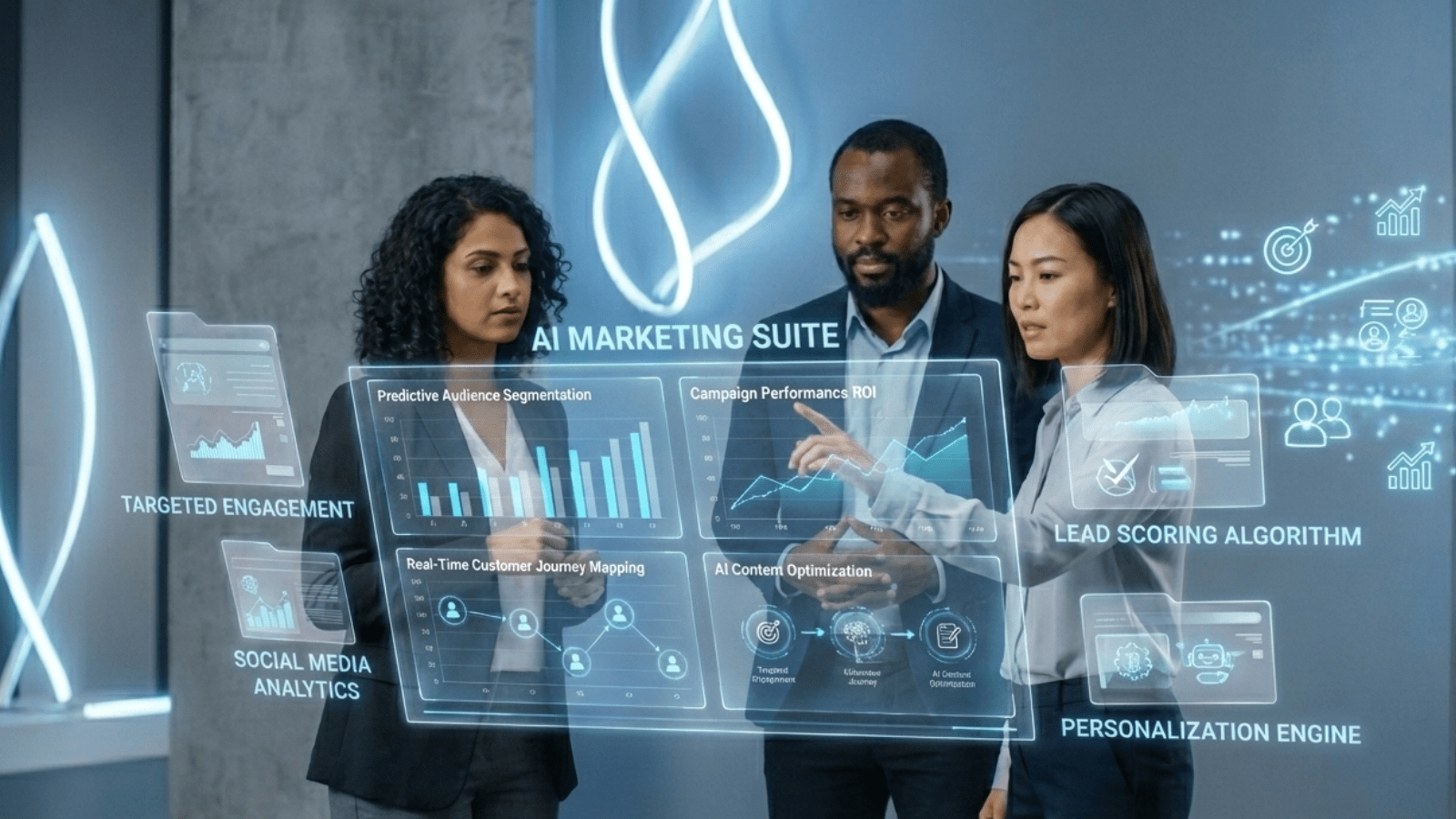
So here we are, wrapping up 2025, and AI in B2B marketing has made the jump from “interesting experiment” to essential infrastructure. Marketing leaders aren’t wondering if AI belongs in their tech stack anymore. They’re wrestling with how to use it responsibly and make it drive revenue.
The numbers tell the story. By the end of 2025, nearly 90% of marketers reported using AI tools in their daily work, according to the American Marketing Association. The AI marketing market hit $47.32 billion this year, more than double what it was just a couple years back, and analysts project it’ll cross $107 billion before 2030. In B2B specifically, over 70% of organizations are using generative AI in at least one core function, with marketing and sales leading the charge.
What’s interesting isn’t just how many people are using AI. It’s where it’s making a difference. Marketers using AI are saving between 1 to 10 hours per week, with that time redirected toward strategy, testing, and working more closely with sales teams. Around 85% now use AI somewhere in their content workflow, according to CoSchedule. Here’s the thing: the teams seeing the best results use AI to speed up ideation, outline complex topics, and support subject matter experts, while keeping humans in charge of judgment, accuracy, and voice. Teams that tried to fully automate thought leadership without human oversight saw credibility drop and engagement fall. In B2B, speed without substance doesn’t work.
AI also proved itself in personalization and targeting. McKinsey’s research shows that companies investing in AI are seeing revenue increases of 3 to 15%, with sales ROI improvements of 10 to 20%. But the real breakthrough came when teams paired AI tools with high-quality B2B data sources. When companies feed verified, comprehensive data like Chain Store Guide’s retail and foodservice data into their AI platforms, the technology becomes exponentially more effective. AI can instantly analyze this data to identify patterns, score leads, and prioritize outreach in ways that would take human teams weeks or months to accomplish manually. The combination doesn’t just speed things up, it enhances strategic decision-making by revealing which accounts are most likely to convert, streamlines workflows by eliminating dead-end prospecting, and boosts productivity by ensuring marketing and sales teams focus their energy on the right contacts from day one. What used to require extensive research, and networking now happens in a fraction of the time, with better accuracy.
Perhaps the most meaningful shift was how AI started connecting marketing and sales more tightly. Revenue intelligence tools, AI-assisted lead scoring, and shared forecasting models helped reduce friction between traditionally siloed teams. Research shows that companies with aligned marketing and sales teams achieve 19% faster revenue growth and 15% higher profitability, with AI playing a crucial role in bridging the gap between marketing activities and measurable sales outcomes.
This year also exposed limitations. Adoption moved faster than maturity. Organizations layered AI tools on top of fragmented data, outdated CRMs, or unclear processes, resulting in dashboards that looked impressive but failed to translate into actual revenue outcomes. Just because a team has access to AI tools doesn’t mean they know how to ask the right questions or interpret outputs strategically.
What changed most was the mindset. AI stopped being treated as a shortcut and started being treated as infrastructure. High-performing B2B teams learned that AI amplifies whatever you already have. Strong strategy gets stronger. Weak data becomes painfully obvious. Human judgment didn’t become less important. It became more important.
Looking ahead to 2026, AI is moving beyond task automation toward decision support. It’ll increasingly help teams decide what to prioritize, which accounts to focus on, and where to invest resources. Personalization will deepen, but so will expectations around privacy and transparency. The competitive edge won’t come from who have access to AI tools, because everyone will. It’ll come from teams that invest in AI literacy, data hygiene, and cross-functional alignment.
The real takeaway from 2025 is that AI finally started delivering measurable outcomes at scale for B2B marketing, and in doing so, raised expectations permanently. Success will belong to organizations that combine technology with discipline, speed with judgment, and automation with trust. AI didn’t replace marketing strategy this year. It made the difference between having one and not having one impossible to ignore.
Sources:
American Marketing Association (2025) – 1827marketing.com
CoSchedule (2025) – coschedule.com
Madgicx (2025) – madgicx.com
McKinsey & Company (2023, 2025) – mckinsey.com
Social Media Examiner (2025) – socialmediaexaminer.com
All About AI (2025) – allaboutai.com
G2 (2025) – learn.g2.com
DemandSage (2025) – demandsage.com
Demand Gen Report (2025) – demandgenreport.com




April 9, 2026
The teams pulling ahead aren’t using more tools. They’re using better data. There is no shortage of AI hype. However,https://www.chainstoreguide.com.

February 4, 2026
After 30 years of serving up Caribbean vibes and tropical cocktails, Bahama Breeze is calling it quits. Darden Restaurants announcedhttps://www.chainstoreguide.com.
January 30, 2026
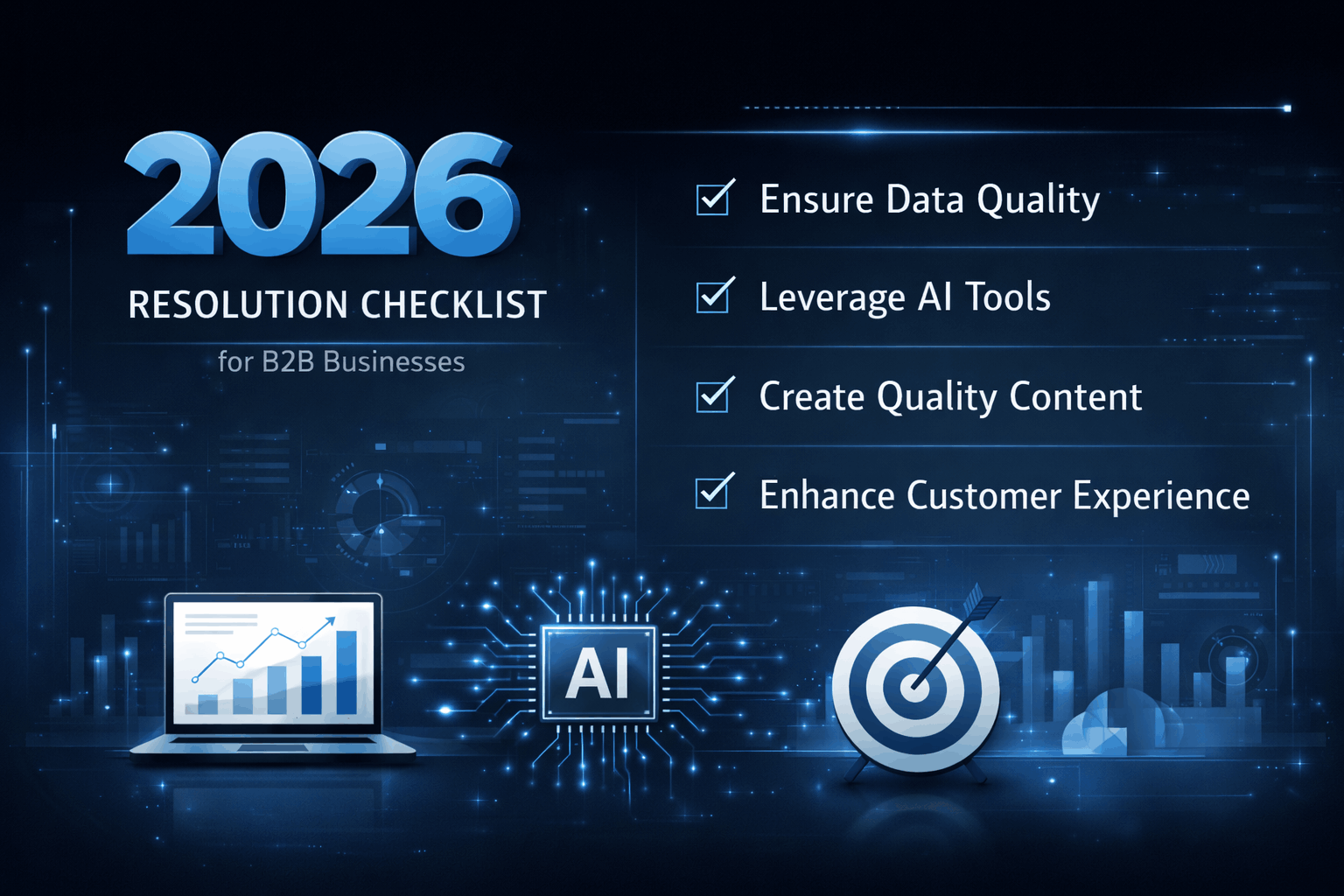
As we enter 2026, B2B marketing is undergoing a profound transformation. Buyers are more sophisticated, and the tools at ourhttps://www.chainstoreguide.com.