Most B2B companies have a targeting problem, and most of them know it. Campaigns go out, leads come in, and a significant portion go nowhere. The sales team complains about quality. Marketing defends the numbers. Nothing changes. What gets lost in that argument is the actual question worth asking: who are we targeting, and do those look anything like our best customers?
Seventy-nine percent of marketing leads never convert to sales. The most common reason is not nurturing, but the root cause is almost always the same: the leads were never a good fit. Poor qualification accounts for 67% of lost sales, and 41% of B2B marketers now say improving lead quality is their single biggest challenge, ranking it higher than lead volume.
The fix starts earlier in the process than most companies look: understanding, clearly and specifically, who your best customers are.
In B2B, a reliable pattern holds across industries: roughly 80% of revenue comes from about 20% of customers. Those accounts close faster, renew reliably, expand into adjacent products, and refer to other buyers. They make the entire operation easier. Most companies have a general sense of their target market, but not a precise picture of the profile that produces durable revenue.
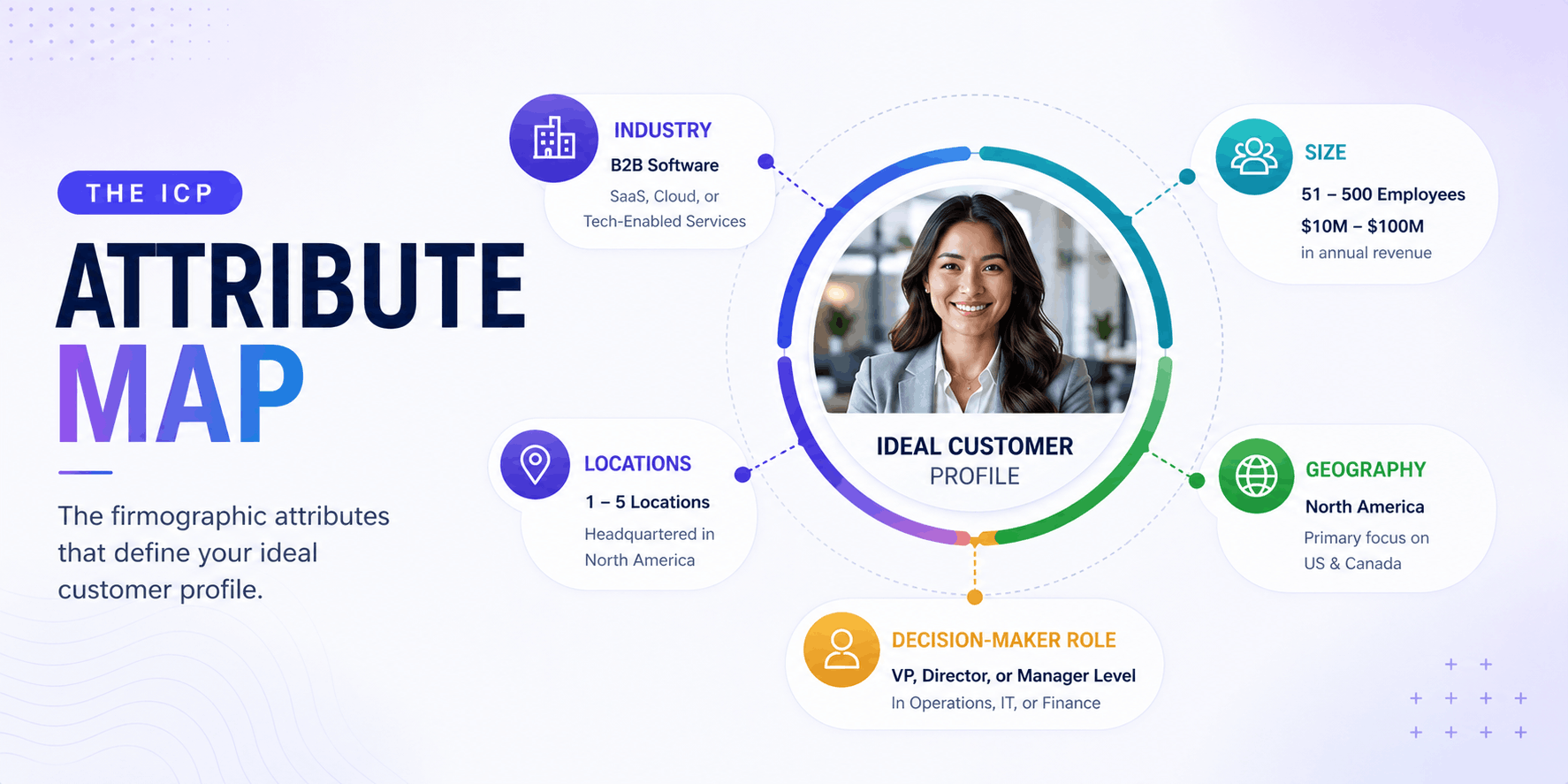
Building that picture does not require a research project. It requires looking at what you already have. Pull your top 20 to 30 accounts by revenue, lifetime value, retention, and deal velocity. Then look for patterns. Industry vertical. Company size. Number of locations. Geographic footprint. Annual revenue band. Decision-maker title. How they found you. How quickly they moved through the sales process. Those attributes, taken together, form what is typically called an ideal customer profile (ICP). Not a guess about who might buy from you. A data-driven description of who already has, and who stayed. Weigh that analysis toward 12-month retention data rather than recent wins. It is a stronger signal of true fit.
Once the profile is defined, the next step is finding more companies that match it. This is what cloning means in practice. Not copying a customer but identifying other organizations that share the same firmographic fingerprint: the same industry, a comparable revenue range, a similar number of locations, the same geographic market. The specificity matters more than most teams realize. A chain with 100 locations and one with 700 are at completely different stages of maturity. Reaching both with the same message produces noise, not pipeline.
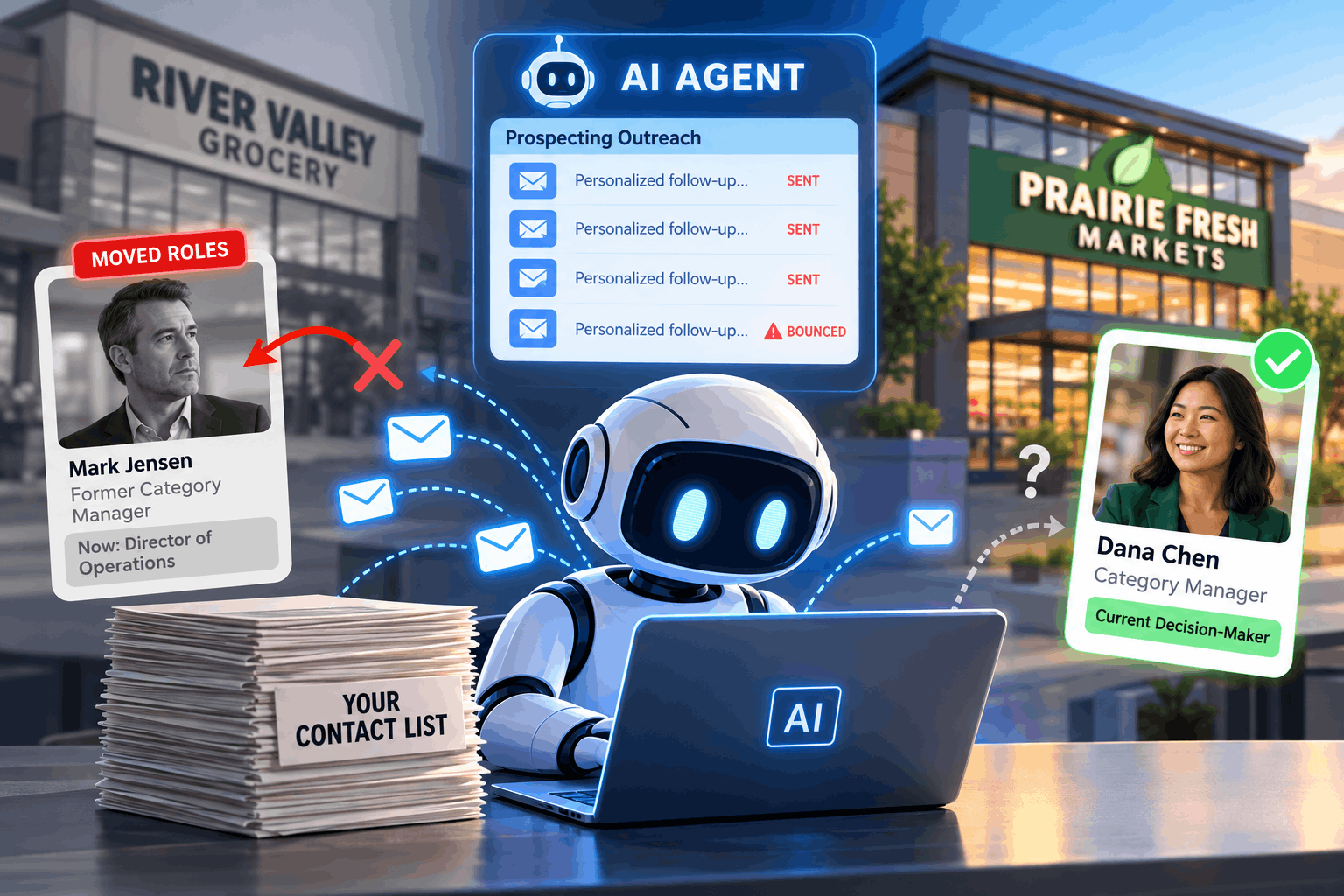
This is where data quality becomes the constraint. A well-defined ICP only creates an advantage if you can build a list that reflects it. Most B2B data platforms make that harder than it should be. They cap exports. They charge per email contact. Their records go stale. A 2024 Gartner study found that 68% of B2B companies report their sales pipeline is at risk because of data decay, with contacts going stale within 12 months. That problem is getting more expensive as more teams layer AI into their prospecting. McKinsey found that sales teams using AI for prospecting report 50% more pipeline per rep per quarter, but that lift depends entirely on the quality of the data the AI is working from. Feed it stale contacts and it just automates failure at scale.
CSG LeadSearch is built around this specific problem. It covers retail and foodservice chains, with no export caps, no email credit system, and data that updates daily. When you have a clear ICP, you can filter by the exact attributes that define it: chain type, unit count, revenue range, geography, decision-maker role. The result is a verified list of companies that look like your best customers, with the contacts you need to reach them, without the artificial limits that slow most teams down.
An ICP is not a set-and-forget document. The companies that use it most effectively treat it as a living profile, revisited regularly as the market shifts and the product evolves. Teams that refresh their ICP quarterly show 20 to 35% better conversion rates from marketing-qualified leads to closed deals compared to teams that update annually. Rising acquisition costs, falling win rates, or higher churn among newer customers are all signs the profile has drifted and is worth revisiting.
None of this requires a bigger budget or a new platform. It requires a more honest look at who is driving revenue today, and a more disciplined approach to finding more of them. The companies pulling ahead right now are not spending more on lead generation. They are spending it against better-defined targets.
Your best customers are already telling you who to target next. You just have to read what they are saying.
Sources
Lead conversion failure rates and lead quality challenges: MarketingSherpa via Salesforce, cited by CIENCE and Affinco (2025-2026); Cropink (2024); DemandMojo (2025). Lead qualification and lost sales data: Landbase (2026); Trustmary via Landbase. ICP adoption and performance benchmarks: HubSpot State of Marketing Report 2024/2025 via NearStream; GrowLeads / Salesmate ICP Model Update 2026. Data decay and pipeline risk: Gartner (2024), cited by CIENCE (2026). AI prospecting performance: McKinsey (2024), cited by Landbase (2026). 80/20 revenue concentration in B2B: MTI Selling (2024); No Smoke and Mirrors (2025).




October 15, 2026
Chick-fil-A won’t shrink the sandwich. Costco won’t touch the hot dog. The cost has to land somewhere, and suppliers arehttps://www.chainstoreguide.com.
October 8, 2026
AI is moving into prospecting and purchasing. The data underneath it decides who wins. AI in B2B has movedhttps://www.chainstoreguide.com.

October 2, 2026
Near-record diesel and rising food costs are pulling chain sourcing closer to home. Every truck pulling up to a storehttps://www.chainstoreguide.com.