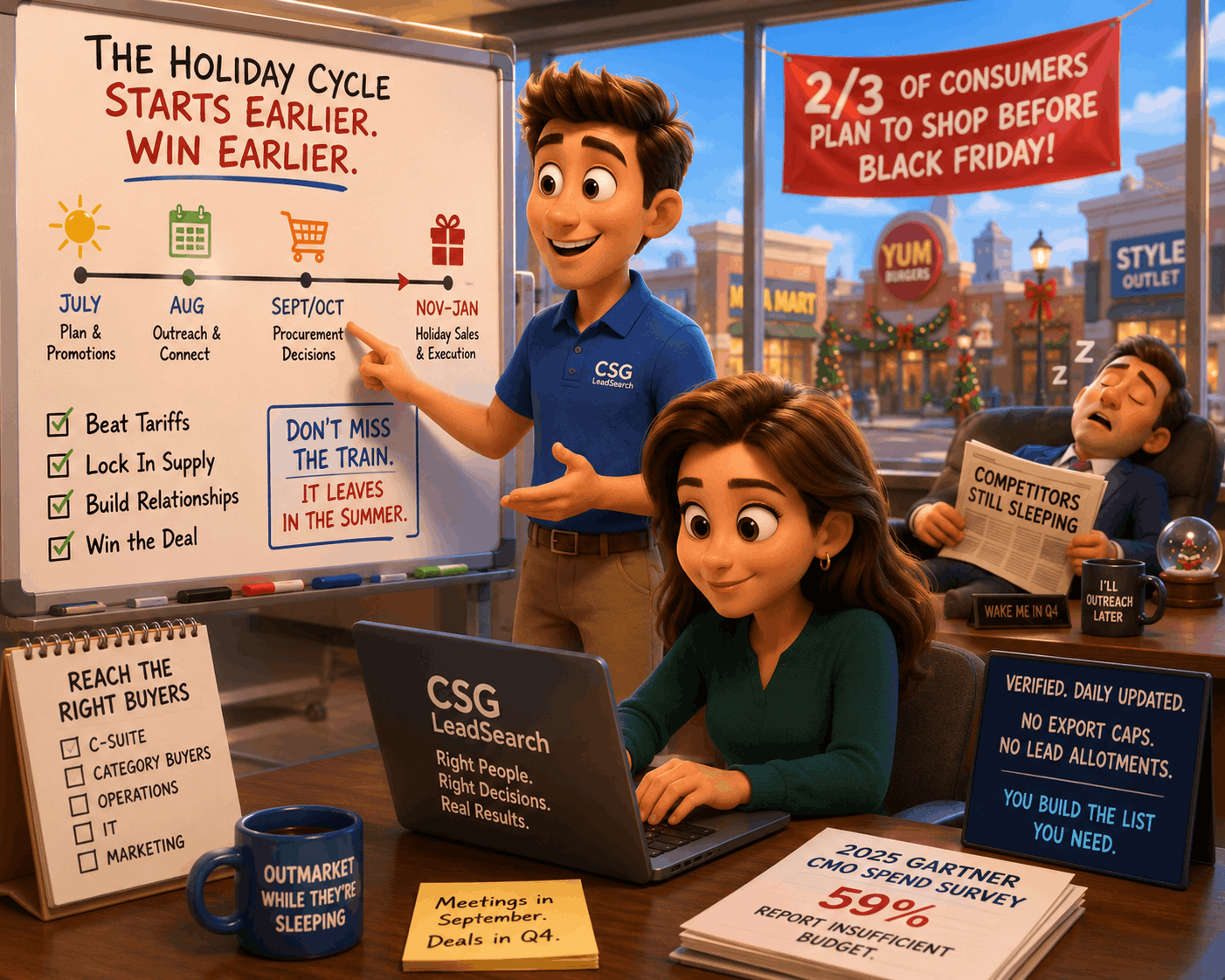

The holiday season no longer has a starting gun. By 2025, the retail holiday cycle had stretched into a six-month run, opening with summer promotions in July and extending through mid-January. Consumers are shopping earlier, spreading budgets further, and making decisions well outside the traditional November window. Tariffs, inflation, gas prices, and tighter household budgets have only accelerated that shift. For B2B companies selling into retail or restaurants, that calendar change is not a consumer footnote. It’s a timeline you need to be working right now.
Here’s the mechanics of it. Retail procurement managers now expect suppliers to deliver accurate inventory data, pricing, and delivery timelines by September or October, long before the holiday crunch arrives. That means decisions about which vendors make the cut are happening this summer, not in the fall. If you’re not in front of the right buyers before those conversations close, you’re not just losing a deal; you’re not even in the room.
Tariffs have compressed this timeline further. Categories with heavy import exposure (electronics, houseware, toys, apparel) are under real cost pressure heading into the back half of the year. Gas prices add friction at every point in the supply and distribution chain. Retail buyers are locking in pricing and supply earlier to get ahead of uncertainty. That urgency runs through every B2B company that touches those categories. The time for relationship building and positioning is now. Late outreach is a different, much harder conversation.
Summer looks quiet. Inboxes thin out, response rates slow, and it’s tempting to treat the next few months as a runway rather than a deadline. That’s the wrong read. The B2B companies that use summer to prospect, qualify, and get in front of new contacts are the ones who walk into September with meetings already on the calendar. The ones who wait for the season to feel urgent are walking into a procurement cycle that’s already in motion. They are trying to catch a train that left without them.
None of that works without knowing who to call. Retail and restaurant chains are large organizations with layered buying structures. The person who signs off on a technology contract is not the same person managing supplier relationships, and neither of them is the one evaluating staffing solutions. Reaching the wrong contact doesn’t just waste time. It kills deals before they start. CSG LeadSearch gives B2B sellers verified, daily updated contact data across retail, restaurant, and service chains, from C-suite executives and category buyers to operations, IT, and marketing decision-makers, organized by role so you can identify exactly who handles purchasing decisions in your category. No export caps, no lead allotments. You build the list you need, not the one a platform decides to give you.
This is not the time to be a Scrooge with your outreach budget. Inflation has flattened marketing investments broadly. The 2025 Gartner CMO Spend Survey found that across marketing, 59% of CMOs report insufficient budget to execute their strategy, and rising media costs mean they’re getting less for every dollar spent. Most of your competitors are stretched thin and pulling back on prospecting. When budgets are flat and attention is scarce, the companies that do invest actively face less competition for that attention, not more. The companies that fill the silence now arrive at Q4 with relationships already built, pipeline already moving, and deals already in progress.
Two-thirds of consumers in 2025 said they planned to start holiday shopping before Black Friday. The chains and restaurant groups serving those shoppers are already adjusting their plans, locking in vendors, finalizing assortments, and making decisions. Your competitors, for the most part, are still asleep. The B2B companies that move now don’t just get a head start. They get the meeting, the relationship, and often the deal, before anyone else wakes up.
Chain Store Guide’s CSG LeadSearch databases are updated daily with verified contacts across retail, restaurant, and service chains, from C-suite to category buyers, organized by role so you reach the right decision-makers before the procurement window closes. No export caps, no lead allotments. Learn more at chainstoreguide.com.
Sources
Holiday cycle expansion and consumer early-shopping behavior: Avison Young Holiday Retail Trends Report, 2025; Bazaarvoice Holiday Shopping Trends, 2025. B2B procurement timelines shifting earlier: commercebuild Holiday eCommerce 2025. Tariff and gas price impact on retail procurement: Logile Holiday Retail Playbook, 2025. Marketing budget constraints and media cost inflation: Gartner CMO Spend Survey, 2025. Pre-Black Friday shopping intent: McKinsey ConsumerWise, August 2025, via Logile Holiday Retail Playbook, 2025.




September 4, 2026
Four months are left on the calendar, but that number is deceiving. Thanksgiving week is gone. The two weeks aroundhttps://www.chainstoreguide.com.
August 28, 2026
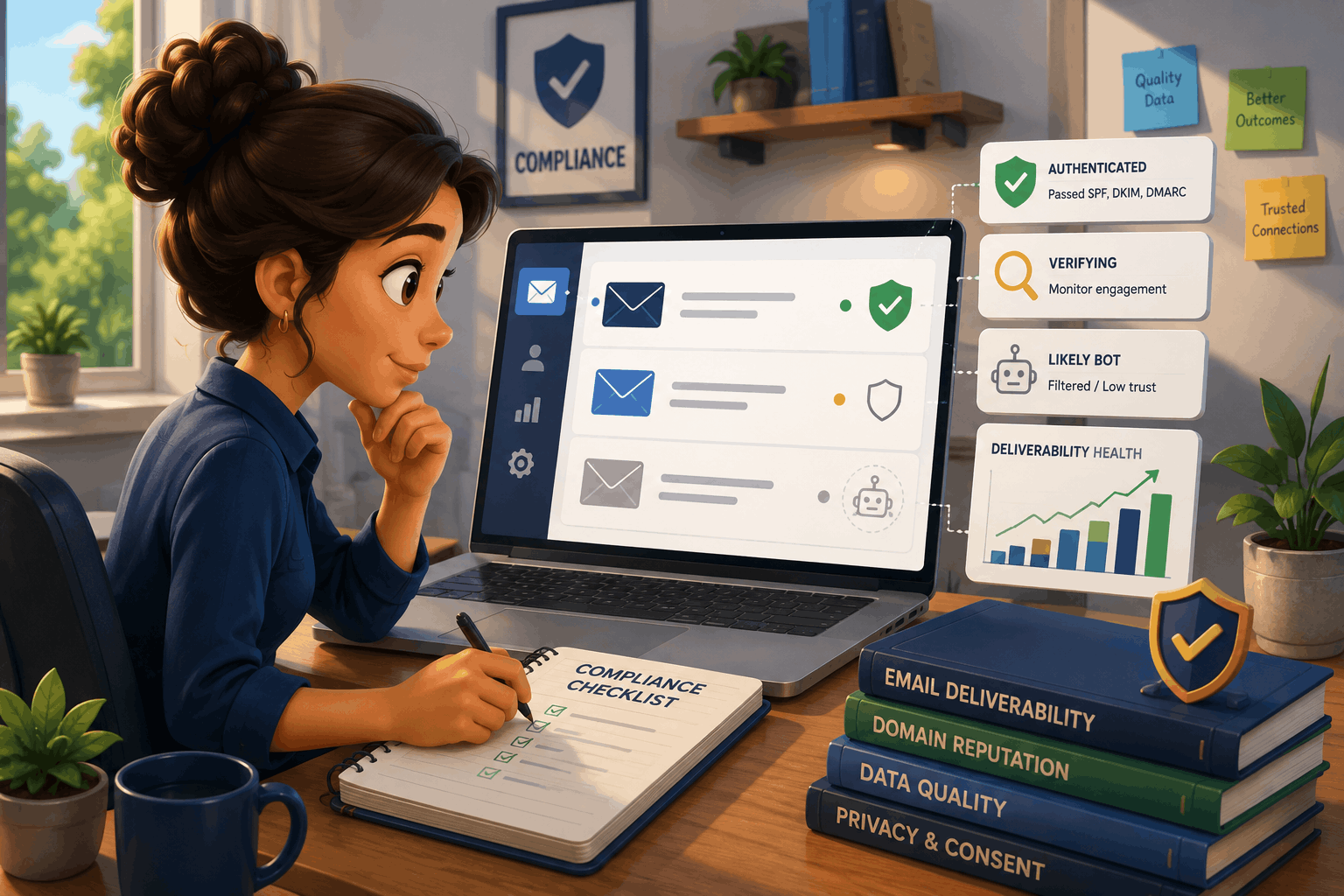
Why inbox rules, stale metrics and AI personalization are rewriting the playbook for teams selling into chain accounts Emailhttps://www.chainstoreguide.com.
August 20, 2026
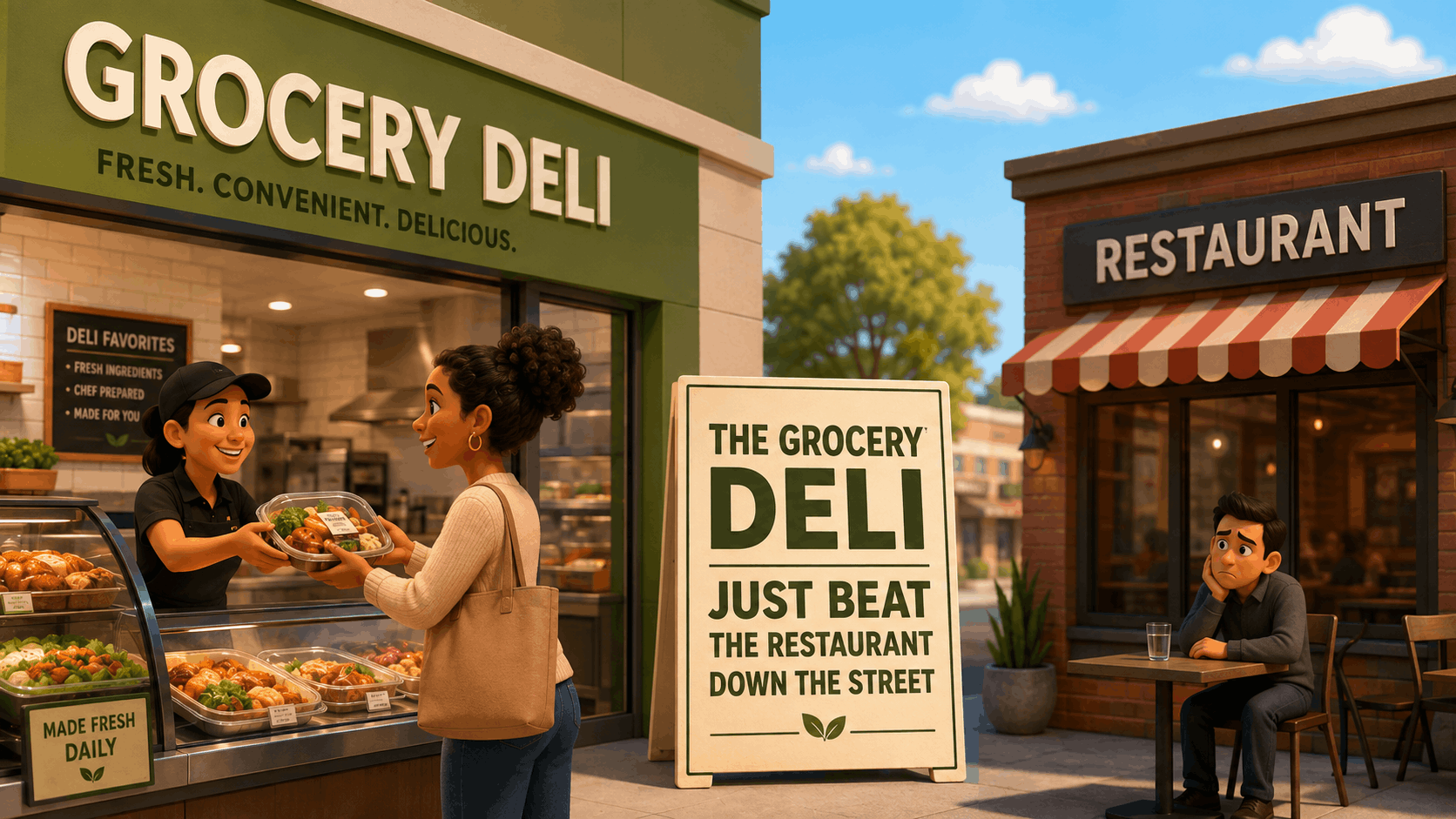
Twelve percent. That’s how many grocery shoppers said, back in 2017, that they bought a deli-prepared meal instead of goinghttps://www.chainstoreguide.com.