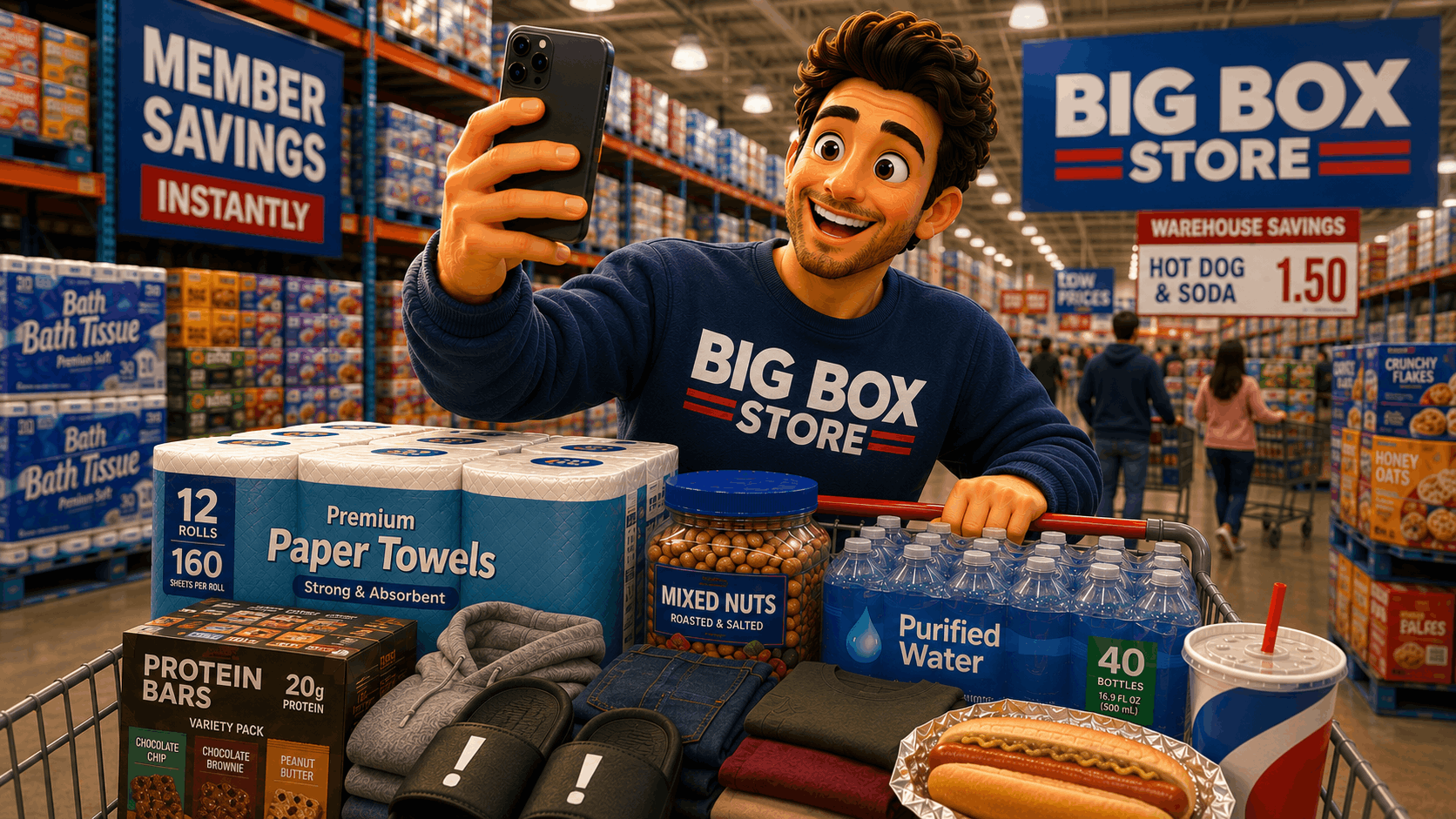

For decades, retail marketing has worked in one direction. The retailer decided what mattered, bought the ad space, and told shoppers what to think. That has quietly reversed. Now the shopper decides what’s exciting, posts about it, and the retailer watches to see what catches on before it commits. It’s a generational handoff as much as a marketing one, and it’s already changing who gets shelf space.
Costco is the clearest example. It doesn’t pay a single influencer. Someone posts a video of a new dessert, or a Kirkland and it takes off, and within days the item is a headline. Mizuho analyst David Bellinger said the brand barely spends on marketing, but makes sure everyone knows how much it appreciates the people doing that marketing for free., Reposting their videos and thanking them in its own member magazine. Costco’s own CFO, Gary Millerchip, told investors on an earnings call that almost half of new member sign-ups are now under 40. Bellinger’s independent estimate landed in the same range. That pull toward physical retail isn’t unique to warehouse clubs, either. Shoppers 18 to 24 made 62% of their general merchandise purchases in stores last year, compared with 52% for shoppers 25 and older, according to Circana data. For a generation that grew up shopping on a phone, the in-person experience, the browsing, the finds worth filming, is doing real work. A warehouse club built on boomers and Gen X is quietly becoming a millennial and Gen Z habitat, and no ad campaign made that happen. The shoppers did, posting their finds on social media, whether it was the hot dogs, the name-brand apparel tucked between pallets, the furniture, or the cakes.
Private Label Is Outgrowing National Brands
$282.8 billion
in U.S. private label sales last year, growing nearly 3x faster than national brands
Source: Circana, via the Private Label Manufacturers Association
Sam’s Club is proof this isn’t a one-retailer story, and it’s taking the opposite approach. Rather than waiting for organic buzz, the Walmart-owned chain launched its own influencer program this year and set a goal of growing its creator base 25x over in 2026. It’s also rebranding around app-first shopping and a younger, more digital identity. The result looks like Costco’s: half of Sam’s Club’s new members are now millennials or Gen Z. Same generational shift, opposite playbook. One retailer let it happen. The other is buying its way into it.
Either way, the shopper’s conversation is now shaping the shelf itself, and not just which national brands get featured. Private label hit a record $282.8 billion in U.S. sales last year, growing at almost 3x the rate of national brands, according to Circana data released by the Private Label Manufacturers Association. National brand unit volume actually dropped. Store brand units went up. Retailers aren’t easing off either. Kroger rolled out Smart Way and Mercado. Walmart launched bettergoods. Target has Deal Worthy and Figmint. CVS stood up Well Market. Each is a brand new internal label, which means a new team deciding what gets sourced. McKinsey’s State of Grocery North America 2026 report found 85% of shoppers now think private label matches or beats national brand quality, and 69% say their retailer carries store brand products they can’t find anywhere else.
For anyone selling into these accounts, that combination is worth sitting with for a second. Younger shoppers are pulling retailers toward faster, more reactive merchandising. Retailers are answering by standing up entirely new private label divisions to capture that energy internally. New divisions mean new buyers, whether the goal is keeping a product on the shelf or becoming the one making what’s now on it, since every new private label line is also a new sourcing decision is up for grabs. Those new buyers are exactly the contacts a supplier needs to reach first, not the ones they already know from a renewal call two years ago.
The practical move is simple. Before your next pitch, check whether your target account has launched a new private label line or reorganized its merchandising team in the past year. If it has, there’s a good chance a new person owns that decision and finding them matters more than polishing the pitch. CSG LeadSearchTM refreshes its decision-maker data daily rather than quarterly, which is exactly the kind of gap that opens when categories move this fast.
The real lesson in Costco’s influencer moment was never really about influencers. Shoppers move first now. Retailers watch, then react, fast. Suppliers who want in have to move on that same clock, or they’ll find someone else already in the room.
Sources
https://www.today.com/video/inside-costco-s-growing-cool-factor-with-younger-shoppers-267213893945
https://www.newstribune.com/news/2026/jul/05/costcos-growing-cool-factor-attracts-younger/
https://www.foxbusiness.com/lifestyle/nearly-half-costcos-new-members-under-40-retailer-bucks-industry-traffic-decline
https://www.chiefmarketer.com/sams-club-taps-its-members-for-new-influencer-program/
https://www.emarketer.com/content/sams-club-rebrand-growth-younger-shoppers
https://www.plma.com/article/us-private-label-industry-reached-2828-billion-sales-2025
https://www.mckinsey.com/industries/retail/our-insights/the-state-of-grocery-north-america



October 15, 2026
Chick-fil-A won’t shrink the sandwich. Costco won’t touch the hot dog. The cost has to land somewhere, and suppliers arehttps://www.chainstoreguide.com.
October 8, 2026
AI is moving into prospecting and purchasing. The data underneath it decides who wins. AI in B2B has movedhttps://www.chainstoreguide.com.
October 2, 2026
Near-record diesel and rising food costs are pulling chain sourcing closer to home. Every truck pulling up to a storehttps://www.chainstoreguide.com.